


.jpg)
.jpg)


 СН4 мал 200.jpg)



You pay for waste collection every month. Does a new waste law mean a different bill? That conclusion is premature. But you can already check charges and challenge failed collections under existing rules.
What has happened—and what has not?
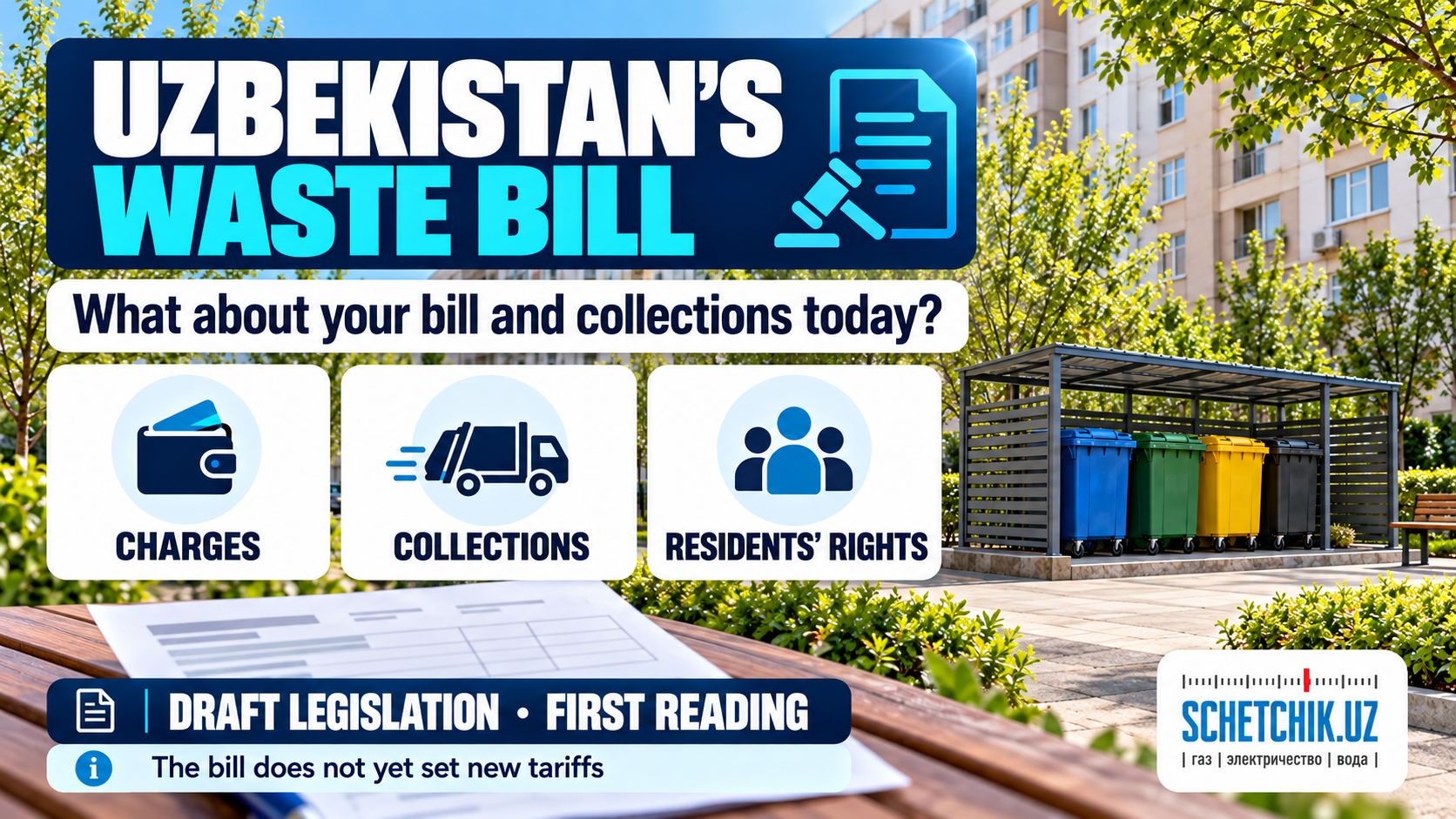
On 20 October 2026, the Legislative Chamber passed the revised Waste Bill at its first reading, as confirmed by the parliamentary report. The National Committee on Ecology and Climate Change explained the proposals on 22 October. A first reading does not bring a law into force. The sources checked on 27 October did not establish final adoption and entry into force of the new version. Any future commencement date must be checked in the officially published law.
What does the bill propose?
The proposals clarify the responsibilities of authorities and operators, the handling of different waste streams and waste accounting. Recycling and safe disposal are central themes. The official explanation describes landfill requirements and a proposed minimum distance of 300 metres between transfer stations and residential buildings. That proposal concerns transfer stations, not every neighbourhood collection container.
Will collection charges increase?
The first reading does not set a new tariff. The materials reviewed do not establish one new nationwide household charge. Check the tariff applicable to your area and billing period, its effective date, charging unit and the number of people recorded. The bill alone is not a basis for increasing your charge or stopping payments.
Collections have been missed. Where do you start?
Record the missed dates and the collection point’s condition with photographs, video and messages to the dispatcher. Ask your operator for the schedule and a registered complaint reference. Request a formal record involving the operator and a mahalla or homeowners’ association representative. Images support the facts but do not replace the procedure required by the rules.
Recalculation is already a right
Paragraphs 31 and 33 of Rules No.95 provide for recalculation when services are not provided or are inadequate, and exemption from payment for the relevant period. A formal record under paragraph 34 supports this. The rules address an operator representative’s failure to attend and also provide for a mahalla seven record to exclude charges for services not actually provided. Ask for a written outcome and confirmation that the billing record has been corrected. A single photograph does not guarantee reimbursement of every payment.
Extra people on the bill or a missing payment?
Paragraph 32 addresses errors in amounts, tariffs, penalties and payment records; paragraph 37 concerns correction of registered-person counts. Gather receipts and supporting documents and request a month-by-month breakdown. Actual occupancy and the recorded count may differ. Simply saying that fewer people live there does not automatically amend the charge.
Check the billing arithmetic
Enter your applicable tariff. Full months only, with unchanged tariff and counts; calculate differing periods separately. The difference is not a refund amount or a decision on eligibility. Data stays in your browser.
What if you live in a private house?
Establish whether your address uses a container collection point or scheduled handover directly to a truck. With the latter method, record the missed arrival date and time. Living in a private house is not itself an exemption from charges. Do not assume building debris or bulky items are included in ordinary container collection: check the separate arrangements.
Sorting and illegal dumping
The bill develops recycling and waste-management requirements. Its first reading does not establish that an identical new duty or fine will apply to every resident tomorrow. Existing rules and restrictions still apply; a pending bill does not permit dumping anywhere. Report illegal dumps to the operator and territorial environmental authorities.
Who can help if the complaint is not resolved?
Start with the operator, specifying the period, problem and requested action: a billing check, formal record or restored collection schedule. Keep the complaint reference. The Waste Management Agency call centre is 1205 for collection and payment issues. If unresolved, submit the documents to its territorial office. Existing rules also provide access to court protection.
Frequently asked questions
Select a question to see the answer
Is the new law in force?
A first reading is confirmed. That does not replace final adoption and entry into force.
Has a new tariff been set?
The first reading itself does not set a tariff. Check the applicable instrument for your area and period.
Can I simply stop paying if a container is full?
Do not treat a full container as an automatic write-off. Document the failure and follow the formal record and recalculation procedure.
Must I wait for the new law to complain?
No. Existing rules already allow you to demand proper service and a billing check.
Is a photograph enough?
It helps establish the circumstances but does not replace the formal record under paragraph 34.
What if the operator does not attend?
Involve a mahalla or homeowners’ association representative. Paragraph 34 addresses non-attendance; retain evidence of the invitation and complaint.
Does 300 metres apply to a container by my building?
No. The official explanation describes a transfer-station proposal.
Two people live here but four are billed. Can the calculator settle this?
No. It compares arithmetic only. Recorded-person corrections and eligibility require supporting documents.
Is everyone now required to sort under new rules?
That does not follow from a first reading. Check existing requirements separately.
Where can I report a problem?
To your operator and 1205. Keep addresses, account numbers and documents out of public comments.
What should be fixed first: collection schedules, billing or the collection point? Please keep addresses and account numbers out of comments.
Sources
- Парламент / Parlament / Parliament
- Экология / Ekologiya / Ecology · 22.10.2026
- №95 · приложение 1 / 1-ilova / Annex 1 · 31–34, 37, 41–44
- Действующий закон / Amaldagi qonun / Current law · 362-II
- Контакты / Kontaktlar / Contacts · 1205
Checked on 27 October 2026.


0 comments